
The UK’s 2025 Critical Minerals Strategy
...Securing the supply to power Britain’s growth sectors to 2035
28 November 2025
Vision 2035: The UK’s Updated Strategy for Securing Critical Minerals
On 22 November 2025, the UK government formally launched its new critical minerals framework, Vision 2035, a long-term plan to secure the minerals on which modern industry, national security and the clean energy transition depend. In his ministerial foreword, Chris McDonald emphasised the scale of the challenge: in the UK alone, demand for copper is expected to almost double by 2035, while demand for lithium could rise by as much as 1,100%. McDonald frames Vision 2035 as a strategic response, not only to rising global demand, but to mounting geopolitical risk in supply chains, including the concentration of processing and mining in a few countries.
The strategy aims to turn vulnerability into opportunity. It seeks to harness the UK’s strengths in midstream processing, recycling and finance, and to build on its mineral-rich regions such as Cornwall, Teesside and parts of Wales and Scotland. At the same time, it implicitly acknowledges the limitations of past approaches that relied on ambitious declarations and memoranda of understanding, which often lacked tangible deliverables. Vision 2035 adopts a more grounded posture: recognising the UK’s constrained starting point, the complexity of global supply chains and the need to prioritise what is realistically deliverable. The dedicated fund of up to £50 million for critical minerals initiatives reflects this shift. Some may view the scale of support as insufficiently bold, yet it signals a move away from abstraction towards concrete, targeted intervention. In the sections that follow, the strategy is examined in comparative context, highlighting where it departs from earlier iterations and where it continues long-standing patterns, for better or for worse.
The UK Critical Minerals Strategy in context
The UK’s 2022 Resilience for the Future strategy was pitched as the country’s first serious attempt to confront its dependence on critical minerals. It set out three pillars – Accelerate, Collaborate, and Enhance. It promised a more resilient future supply chain. Yet it already made clear that the UK was almost entirely dependent on imports for these materials and that China was “the primary producer of 12 of the 18 minerals” considered critical. Those blunt assessments came not from cynics, but from Parliament’s Foreign Affairs Committee. That dependence forms the backdrop to almost every ambition the strategy claimed to pursue.
After three years of debating, Westminster scrutiny and witnessing both allies and competitors’ interventions to secure their own supply chains through enabling legislation, dedicated financing instruments for practical capacity building, and drawing lessons from its early attempts at international partnership building, the UK government has now released a renewed and more focused framework: The UK’s Critical Minerals Strategy: Vision 2035. The strategy places critical minerals at the heart of the country’s Industrial Strategy, linking secure supply directly to economic growth, national security and the clean energy transition. This is framed as a way of turning vulnerability into opportunity and setting a clear long-term ambition:
“The UK has the critical minerals it needs to drive economic growth and the clean energy transition, harnessing our competitive advantage in midstream processing and recycling of critical minerals.”
To deliver this vision, the government defines two central policy objectives: optimise domestic production and build resilient UK and global supply networks.




What Vision 2035 changes
Vision 2035 moves beyond high level statements of risk and, for the first time, sets out quantifiable measures of success. Although the targets may be viewed by some as modest, there is merit in establishing realistic, evidence-based goals that reflect existing bottlenecks and can be followed by tangible, actionable delivery plans. Vision 2035 moves beyond high-level statements of risk and instead quantifies success for the first time. By 2035, the UK aims for:
-
At least 10% of annual UK industrial demand for critical minerals to be met through domestic production (extraction, processing and refining), including a specific target of 50,000 tonnes of lithium (or lithium carbonate equivalent).
-
20% of annual industrial demand to be met through recycling of products to recover critical minerals.
-
No more than 60% of the UK’s demand for any given critical mineral to come from a single country of origin.
As mentioned, these targets are deliberately stretching. They acknowledge that the UK will remain a net importer, but seek to reduce exposure to shocks and build a more diversified, circular and resilient system. However, even in a “successful” scenario, over 70% of demand will still be covered by foreign supply. These figures are often presented as signs of ambition; they can just as easily be read as formalised admissions of enduring dependency. The UK is not planning to substitute itself out of global markets; it is attempting to manage its exposure within them.
One of the most obvious evolutions lies in the architecture of the policy. The 2022 document relied on a single list of eighteen critical minerals, defined primarily through a combination of economic importance and supply risk. Vision 2035, by contrast, sits on top of the 2024 Criticality Assessment and expands the policy focus through a new growth minerals list, covering minerals such as copper, beryllium, chromium, uranium and synthetic graphite, where demand from growth sectors is expected to increase significantly by 2035, even if they do not yet rank as highly under the prevailing criticality conditions. This creates a clearer link between mineral demand and the Industrial Strategy’s sector plans, backed by indicative demand signals for technologies such as EVs, grid infrastructure and renewable power.
A notable new element is the government’s decision to allocate £50 million pounds, channelled through the Department for Business and Trade, to support early-stage domestic critical minerals projects. In absolute terms, the figure is small when set against the scale of capital required to reshape supply chains for clean energy, defence and high technology manufacturing, and appears modest when compared with the far larger sums mobilised by allied economies to accelerate onshoring and strategic resilience. Yet its significance should not be understated. This marks the first time that the UK government has directly fenced funding specifically for primary supply and midstream capacity in critical minerals, signalling a shift towards more focused, grounded and tangible intervention compared to the high-level ambition and abstract nature of previous strategies. It aligns with Vision 2035’s more pragmatic posture: acknowledging structural constraints while still putting real, if limited, resources behind the ambition to build a domestic foothold in extraction, processing and recycling.
In that sense, Vision 2035 is less a rupture with 2022 than an elaboration. The government now talks more explicitly about supporting the “industries of tomorrow,” tying critical minerals directly to the Industrial Strategy’s growth sectors and to a vision of midstream, high-ESG processing and recycling as areas of comparative advantage. The rhetoric is more industrial and more confident, but the practical constraints are familiar. The shift looks forward-thinking, but it also exposes how fluid the notion of “critical” has become. The 2024 assessment drew criticism for excluding copper from the formal critical list, despite widespread concerns about future supply tightness. In parallel, minerals move in and out of priority status as methodologies and political priorities evolve. When definitions and lists change that frequently, measuring progress or failure against any fixed benchmark becomes difficult. The risk is a kind of classification drift in which the label “critical” says as much about policy fashion and modelling approaches as it does about structural exposure.


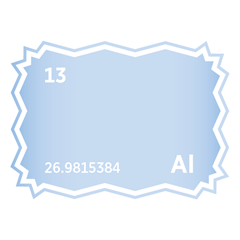
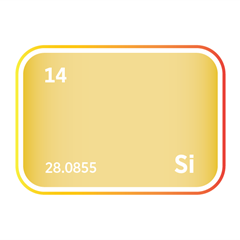
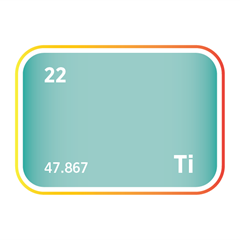
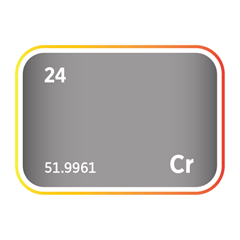
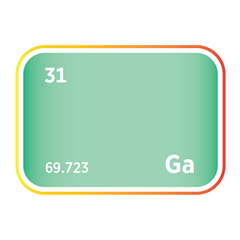
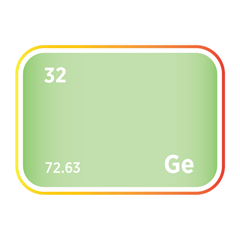
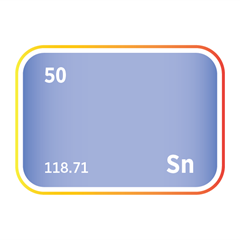
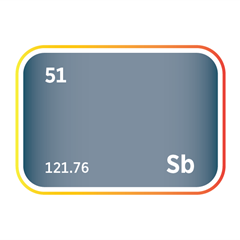



Critical Minerals of the UK



Meet the Critical Minerals team
Trusted advice from a dedicated team of experts.

Henk de Hoop
Chief Executive Officer

Beresford Clarke
Managing Director: Technical & Research

Jamie Underwood
Principal Consultant

Dr Jenny Watts
Critical Minerals Technologies Expert

Ismet Soyocak
ESG & Critical Minerals Lead

Thomas Shann Mills
Senior Machine Learning Engineer

Rj Coetzee
Senior Market Analyst: Battery Materials and Technologies

Franklin Avery
Commodity Analyst

Shunjie Zhao (Tony)
Commodity Analyst: APAC
Brought to you by
Franklin Avery
Commodity Analyst
Ismet Soyocak
ESG & Critical Minerals Lead

How can we help you?
SFA (Oxford) provides bespoke, independent intelligence on the strategic metal markets, specifically tailored to your needs. To find out more about what we can offer you, please contact us.